

An article by Jean-François Serval in Les Echos on Trump's policies
Donald Trump's protectionism is accelerating the regionalisation of the global economy »
Donald Trump's «MAGA» strategy is taking the United States down the path of industrial isolationism, which will increase the fragmentation of economies. This will require a new monetary order in which the euro has every chance of succeeding, argues Jean-François Serval.
Are Trump's customs measures a flash in the pan, when their effects are, as they stand, relatively negligible? World growth for 2025 is proving to be more robust than expected, at 3.2 1Q3Q according to the OECD, and the US economy is going through a phase of contraction, with the labour market slowing sharply and inflation higher than the target. The protectionist potion has not boosted growth.
Maintaining trade is a positive sign for the global economy, as it enables the latter to bear the brunt of the imbalances caused by the size of the debt. A substantial reduction in international trade would be fatal for all players in the global economy.
Driving down the dollar?
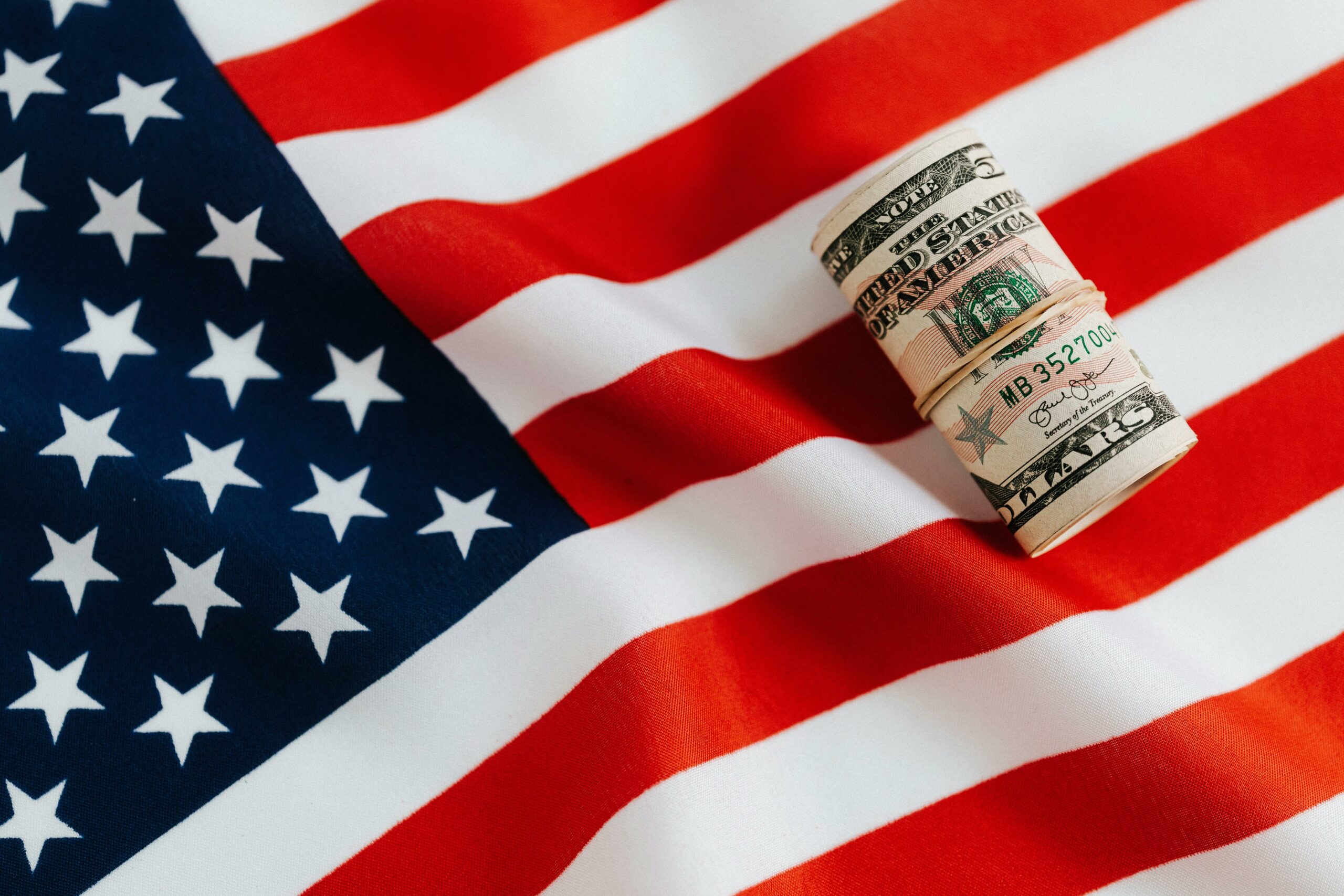
If the United States is to maintain a minimum level of growth, it has no choice but to continue to rely on the fall in the dollar. Can the fall in the greenback, coupled with the rise in customs tariffs, enable us to reconstitute an industrial base capable of competing with the best-performing countries? The answer is far from obvious, given the widening gap in competitiveness between the United States and its major international competitors.
VIDEO - Will the dollar continue to fall?
President Trump's «MAGA» strategy seems more like a retreat, than as a conquering impulse, despite the determination of its promoter. Consumers outside the United States will not buy American cars if they cannot match the performance of the best models.
The average American consumer, if he or she no longer has access to imported products, because too expensive, will have no choice but to buy Made in the USA, albeit of inferior quality. America has thus embarked on a process of industrial isolationism that amplifies the recent trend towards fragmentation of major economic areas.
Read also :
DECRYPTAGE - Companies penalised by the euro's strength against the dollar
ECONOMIC FACT OF THE DAY - When Europe loses out on foreign exchange
The dollar and its evolution are at the heart of this reconfiguration of the global economy. The supremacy of the greenback as the international currency of exchange is now being called into question. The world is faced with the challenge of the dollar's structural weakness andthe accompanying loss of confidence: So what monetary instrument will support the international trade that underpins global growth? The absence of a clear answer to this question justifies the concern in economic circles about the future arrangement of currency parities, which today represents the most decisive issue in a globalised economy.
A new monetary situation
In line with greater regionalisation of the major economic areas, it is reasonable to assume that each of them will evolve with its own monetary area and benchmark. The euro in this configuration is well placed to play a central role, if at least the eurozone proves capable of defending its productive base.
However, the question of a universal standard remains open in order to ensure the settlement of international transactions, which is essential for trade between zones.
However, the question of a universal standard remains open in order to ensure the settlement of international transactions, which is essential for trade between zones. The implementation of a cryptographic standard seems to us to be the most suitable solution for technological developments on world markets. Managed by a universal central bank, it would guarantee a new exchange rate system with fixed but adjustable parities, taking into account the needs and capacities of each country.
This new monetary order can only be envisaged within the framework of an agreement between the most economically powerful nations, which determine the structure of trade. This is a formidable challenge for a world threatened by increasing geopolitical tensions, which would then seek a new balance through a common economic interest built on a monetary reform that brings people together. The dream of the «gentle commerce» of Enlightenment philosophy finally realised!
Jean-François Serval is Chairman of Groupe Audit Serval & Associés, and the author of several books on money, most recently «Innovations financières et Réforme monétaire ou comment sortir du piège de la dette» (Lextenso, 2022).
Jean-François Serval

 EN
EN  FR
FR